OCA Board of Directors Elects New Officers for 2026

The Oil Containment Association Board of Directors held its annual reorganization meeting on January 8, 2026, electing officers to serve through December 2026. The OCA Board consists of 15 elected directors representing member organizations across North America.

2026 OCA Officers

  • President: Thomas A. Whitfield, Vice President of Environmental Affairs, Gulf States Energy Partners (Houston, TX)
  • Vice President: Dr. Patricia Chen, Environmental Engineering Manager, Pacific Coast Industrial (Los Angeles, CA)
  • Secretary: Marcus O. Williams, Director of Regulatory Compliance, Central States Pipeline Co. (Kansas City, MO)
  • Treasurer: Sandra K. Kowalski, CFO, Northern Plains Environmental Services (Bismarck, ND)
  • At-Large Directors: James Brennan (Northeast Region), Dr. Carlos Mendez (Southwest Region), Angela Richardson (Southeast Region)

Outgoing Officers Recognized

The Board recognized outgoing President Dr. Eleanor Hayes, who served two terms as OCA President from 2022-2026, for her leadership during a period of significant growth for the association. Under her leadership, OCA membership grew from 892 organizations to more than 1,847, three new regional chapters were established, and the Certified Containment Specialist program was launched.

President Whitfield’s Statement

“I am honored to serve as OCA President and I look forward to working with our outstanding board and staff to continue building the value we provide to our members,” said Whitfield. “Our priorities for 2026 include expanding our regulatory affairs program, launching the updated CCS certification curriculum, and growing our membership in the renewable energy sector.”

Polyurea vs. PVC Liners: A Technical Comparison for Containment Applications

Choosing the right liner material for your secondary containment system is a critical decision that affects long-term performance, regulatory compliance, and total cost of ownership. This article provides a technical comparison of the two most widely used containment liner materials: polyurea coatings and PVC liners.

Material Properties Overview

Polyurea

Polyurea is a type of elastomer formed by the reaction of an isocyanate component and a resin blend component through step-growth polymerization. For containment applications, spray-applied polyurea coatings are applied directly to foam or substrate surfaces, creating a seamless, monolithic membrane.

Key properties:

  • Shore A hardness: 85-95 (tunable)
  • Tensile strength: 2,000-4,500 psi
  • Elongation at break: 300-600%
  • Temperature range: -60°F to 350°F
  • Chemical resistance: Excellent to petroleum hydrocarbons, moderate to strong acids
  • UV resistance: Good to excellent (with UV stabilizers)

PVC (Polyvinyl Chloride)

PVC liners for containment applications are typically reinforced fabric panels welded together at seams. They are available in thicknesses from 20 mil to 80 mil for containment applications.

Key properties:

  • Tensile strength: 200-400 lb/in (depending on thickness)
  • Temperature range: -10°F to 150°F (unreinforced)
  • Chemical resistance: Good to petroleum hydrocarbons, poor to aromatic solvents
  • UV resistance: Moderate (degrades significantly over 3-5 years without UV stabilizers)

Performance Comparison

Seam Integrity

Polyurea wins decisively. Spray-applied polyurea creates a seamless coating with no joints or seams. PVC liners require heat-welded seams at every panel junction, which are the primary failure points. In our field studies, over 80% of PVC liner failures occurred at seams.

Puncture Resistance

Polyurea is significantly more puncture-resistant. Standard containment polyurea resists puncture from typical job site debris (rocks, equipment feet) that routinely penetrate 40-mil PVC. For vehicle drive-over applications (foam berms), polyurea is the only viable choice.

Temperature Performance

Polyurea significantly outperforms PVC in both extreme cold and heat. PVC becomes brittle below 10°F and can crack under flex loading. Polyurea remains flexible at temperatures as low as -60°F, making it the only appropriate choice for Arctic and sub-Arctic applications.

Cost Comparison

PVC has lower upfront material costs ($0.40-$1.20/sq ft for 40-mil PVC vs. $3-8/sq ft for applied polyurea). However, when total lifecycle costs are considered over a 10-year period, polyurea typically proves more economical due to lower maintenance, repair, and replacement costs.

OCA Recommendation

For portable foam berm containment systems, drive-through containment areas, and cold-weather applications, OCA recommends polyurea-coated systems. For large-area liner applications with controlled environments and lower mechanical stress, properly installed PVC can be a cost-effective solution when budget constraints preclude polyurea.

Cold Weather Containment: Tips for Winter Operations in Northern Climates

As winter settles across the northern United States and Canada, oil containment operators face unique challenges that require specific preparation and equipment considerations. This article provides practical guidance for maintaining effective containment in cold weather conditions.

The Cold Weather Challenge

Cold weather affects containment systems in several ways that can compromise their effectiveness. Understanding these mechanisms is essential for maintaining compliance through winter months.

Material Brittleness

Many containment liner materials become brittle at low temperatures. Standard PVC liners can crack when flexed below 10°F, creating leakage pathways that may not be visible without careful inspection. Foam berm walls can lose their self-sealing properties if the foam becomes too rigid.

Ice Formation

Water accumulation in containment berms freezes and expands, potentially displacing liner materials or cracking containment walls. A berm full of ice provides little or no oil containment capacity, and the expansion forces can permanently deform containment walls.

Spill Response Complications

Cold temperatures dramatically increase crude oil and refined product viscosity, slowing the spread rate but also making cleanup significantly more difficult. Absorbent products perform poorly with highly viscous, cold oil.

Equipment Selection for Cold Climates

Liner Materials

Specify polyurea coatings formulated for cold temperature performance. Quality polyurea remains flexible to -60°F and maintains its elongation and tear resistance. Avoid PVC for any application where temperatures below 10°F are expected.

Foam Core Materials

Closed-cell polyisocyanurate foam maintains its structural properties to -100°F. Specify this foam formulation for all cold-climate containment applications. Standard expanded polystyrene (EPS) foam is not recommended for cold-climate applications.

Winter Maintenance Procedures

Implement the following winter maintenance procedures for all containment systems:

  1. Conduct daily visual inspections during periods of rapid temperature change
  2. Remove accumulated snow and ice from containment berms promptly
  3. Inspect liner seams and foam wall junctions after each freeze-thaw cycle
  4. Drain containment areas after precipitation events to prevent ice accumulation
  5. Test containment integrity with a water fill test after periods of extreme cold

Transformer Oil Containment: Requirements for Utility and Renewable Energy Operators

Electric utility operators and renewable energy facility managers are increasingly subject to secondary containment requirements for transformer oil. This article covers the regulatory framework, technical requirements, and practical solutions for transformer oil containment.

Regulatory Framework

Transformer oil containment falls under multiple overlapping regulatory frameworks. Utility-scale transformers typically contain PCB-free mineral oil, sometimes up to 50,000+ gallons for large power transformers. Key regulations include:

  • EPA 40 CFR Part 112 (SPCC Rule): Applies to facilities with total oil storage capacity exceeding 1,320 gallons that could discharge to navigable waters
  • EPA 40 CFR Part 761 (PCB Regulations): Applies if transformer oil contains PCBs at or above 50 ppm
  • NERC Standards: Reliability standards that indirectly address transformer protection including spill prevention
  • State Environmental Regulations: Many states have additional requirements more stringent than federal minimums

Containment System Requirements

Secondary containment for transformers must hold at least 110% of the largest single container volume. For a 5,000-gallon transformer, this means your containment system must hold at least 5,500 gallons. Options include:

Permanent Concrete Containment Pads

Traditional approach for permanent installations. Reinforced concrete with impermeable coating, designed to hold 110%+ of largest transformer capacity. Sloped toward a collection sump. Cost: $15,000-$80,000 depending on size and site conditions.

Foam Berm Systems

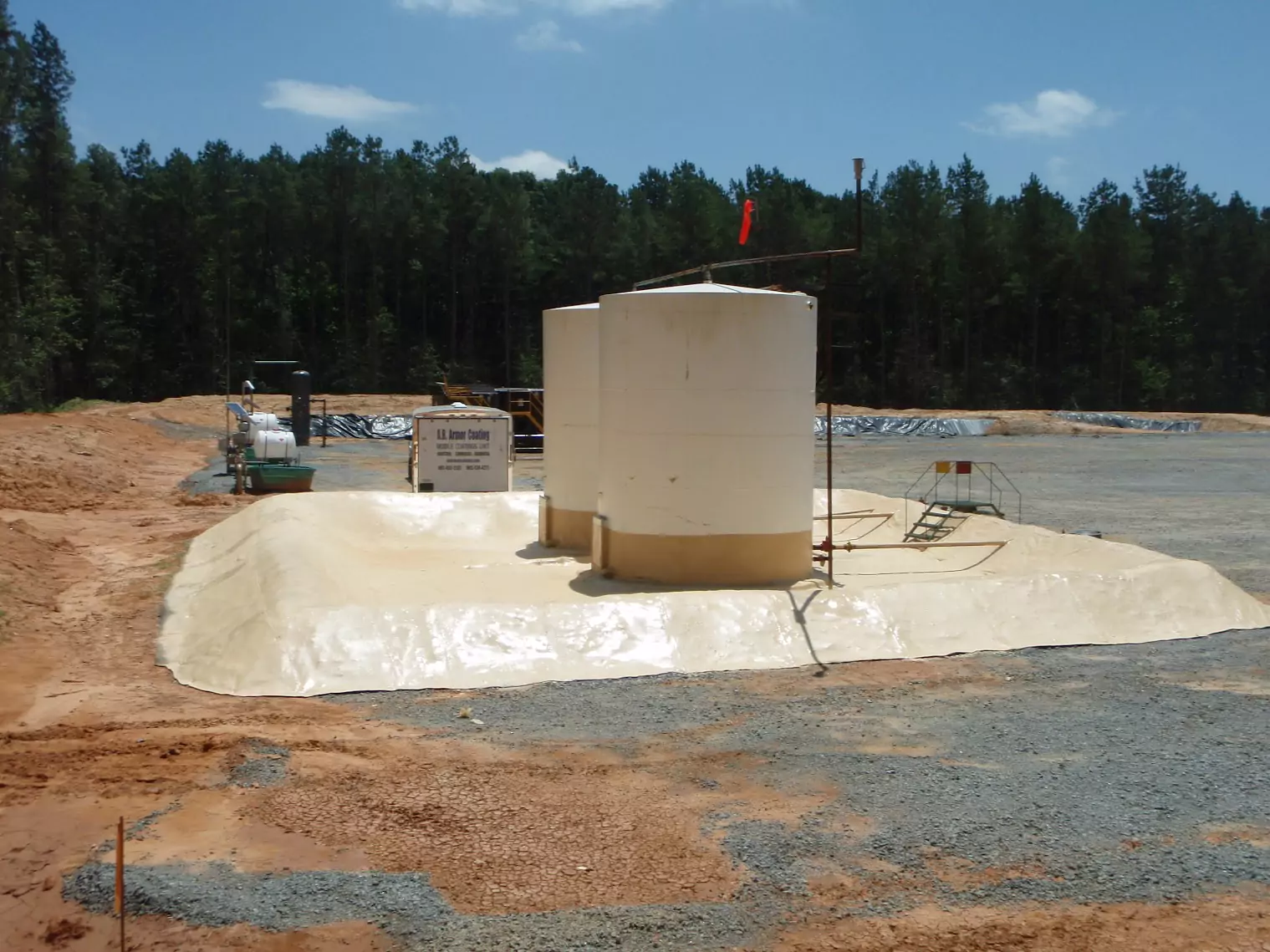
Increasingly popular for substations, wind farm transformer pads, and solar inverter stations where permanent construction is impractical or prohibited. Polyurea-coated foam berms can be configured in custom shapes to fit pad geometries. Key advantages: no excavation required, deployed in hours, fully removable if site is decommissioned.

Modular Steel Containment Systems

Bolted steel panels with liner provide intermediate durability between temporary and permanent systems. Good choice for temporary substations and construction staging.

Renewable Energy Applications

The rapid growth of utility-scale solar and wind installations has created significant demand for flexible transformer containment solutions. A single 100 MW solar farm may have 30-50 pad-mount transformers, each requiring secondary containment. Foam berm systems with custom liner geometries are increasingly the preferred solution due to ease of installation during construction and lower cost versus poured concrete.

5 Common Mistakes in SPCC Plan Development and How to Avoid Them

After reviewing hundreds of SPCC plans through our compliance assistance program, the OCA has identified the five most common errors that lead to plan deficiencies during EPA inspections. Here’s how to avoid them.

Mistake #1: Incorrect Capacity Calculations

Many facilities undercount their total aboveground oil storage capacity, sometimes inadvertently falling into a higher regulatory tier. Common omissions include: drums stored temporarily on-site, mobile equipment fuel tanks, emergency generator fuel storage, hydraulic fluid reservoirs on large equipment, and oil-filled electrical transformers.

The Fix: Conduct a comprehensive oil inventory that includes every container, vessel, and equipment tank at the facility. Update the inventory at least annually. When in doubt, include it.

Mistake #2: Inadequate Secondary Containment Sizing

The most technically common deficiency: containment systems that are too small. The rule requires 110% of the largest single container, but many plans incorrectly calculate this as 100%, or fail to account for accumulated rainwater reducing the effective containment volume.

The Fix: Calculate containment requirements at 110% minimum. For outdoor containment in areas with significant precipitation, consider designing to 150% to account for potential rainwater accumulation between drainage events.

Mistake #3: Outdated Plans

SPCC plans must be reviewed and if necessary amended whenever there is a change in facility design, construction, operation, or maintenance that affects the potential for an oil discharge. Many facilities fail to update their plans after adding storage tanks, changing processes, or modifying containment structures.

The Fix: Establish a formal management of change procedure that triggers SPCC plan review for any significant facility modification. Schedule annual plan reviews even in the absence of changes.

Mistake #4: Missing or Inadequate Inspection Documentation

The SPCC rule requires periodic inspections of containment systems, and those inspections must be documented. During EPA inspections, auditors routinely find inspection logs that are missing, incomplete, or not linked to corrective action records when deficiencies were noted.

The Fix: Implement a formal inspection program with standardized checklists, designated responsible personnel, and a closed-loop corrective action system. Digital inspection platforms can significantly improve compliance in this area.

Mistake #5: Undertrained Personnel

SPCC regulations require that oil-handling personnel understand the regulations, the facility’s SPCC plan, and their roles in spill prevention and response. Training records must be maintained. Many facilities have plans that satisfy the regulatory requirements on paper, but personnel don’t know what to do in an actual emergency.

The Fix: Implement annual SPCC training for all oil-handling personnel. Conduct at least one spill drill per year. Document all training with sign-in sheets and test results. OCA offers online and in-person SPCC training programs through our Certified Containment Specialist program.

Ensuring Safety and Compliance: The Role of Oil Containment Coatings

Ensuring Safety and Compliance: The Role of Oil Containment Coatings

Containing oil is a part of handling risks and ensuring safety in industries dealing with oil and other hazardous substances. Effective containment plays a role in preventing leaks and spills that could harm the environment and damage a company’s reputation. A key strategy for achieving containment involves using coatings, which add an extra layer of protection to enhance the durability and efficiency of containment systems. This piece delves into the significance of oil containment coatings, their advantages and how they aid in upholding safety standards across sectors.

Getting to Know Oil Containment Coatings


Oil containment coatings are applied to surfaces that encounter oil and other hazardous substances. They form a barrier that stops oil from seeping into these surfaces, reducing the risk of leaks or spills. These coatings are engineered to resist chemicals, wear and tear, and the harsh conditions typically present in settings. By creating a shield, they assist in containing spills and preventing oil from spreading to nearby areas.

One key motivation for utilizing containment coatings is safeguarding the integrity of containment systems. Prolonged exposure to oil and chemicals can weaken materials over time, leading to cracks, corrosion, or other forms of deterioration.
Coatings help prevent damage by sealing surfaces and creating a barrier, against chemical attacks. This not prolongs the life of containment systems. Also decreases the necessity for expensive repairs and replacements.

The Significance of Polyurea in Oil Containment


Polyurea has become a choice for oil containment coatings because of its qualities. It is a spray-applied elastomer that quickly cures to form a flexible and seamless coating. When utilized on containment structures, polyurea establishes a barrier that’s resistant to oil, chemicals, and physical wear.

One of the benefits of polyurea is its ability to adhere to substrates like concrete, steel and wood. This versatility enables its application in types of containment systems ranging from storage tanks to containment dikes. The seamless nature of polyurea coatings also ensures there are no spots where leaks could potentially happen. This aspect is especially crucial in areas where containment plays a role in preventing pollution.

Another key feature of polyurea is its flexibility. Containment systems often undergo movements or expansions due, to temperature fluctuations ground shifts or other factors. The flexibility of polyurea allows it to adapt to these changes without developing cracks or compromising its qualities.
Ensuring the integrity and effectiveness of the containment system remains intact and functional in conditions is crucial.

Advantages of Using Oil Containment Coatings


The utilization of oil containment coatings brings advantages that enhance the safety and efficiency of containment systems. Firstly these coatings offer a layer of defense, against harm. Preventing oil leakage into the soil or water coatings help protect the environment and adhere to requirements.

Furthermore, coatings boost the longevity of containment systems. By shielding the underlying materials from chemical corrosion and physical damage coatings prolong the systems lifespan thereby reducing maintenance needs and replacement costs. This does not save money. Also decreases downtime enabling operations to run smoothly without interruptions.

Another advantage of using containment coatings is their ease of application. Modern coatings like polyurea can be applied swiftly and effectively in to reach areas. This makes them a practical choice for both construction and upgrading existing containment systems. The quick curing time of polyurea allows the coated surface to be operational immediately further minimizing downtime.

Apart from their properties, containment coatings can also enhance the aesthetics of containment systems.
Coatings play a role in giving a consistent appearance and enhancing the professional look of a facility. This is crucial in industries where maintaining an image and reputation holds importance.

Various industries utilize oil containment coatings for applications. In the oil and gas sector these coatings are commonly applied to storage tanks, pipelines and containment dikes to prevent any leaks or spills. By safeguarding these systems the coatings help maintain efficiency and safety even in challenging conditions.

In the chemical industry containment coatings serve to shield storage areas and equipment from chemical corrosion. Acting as a barrier these coatings prevent substances from causing harm to the underlying materials thereby reducing the risks of leaks or spills. This becomes particularly critical in facilities handling chemicals where effective containment’s essential for averting environmental harm and ensuring worker safety.

Furthermore the transportation sector reaps benefits, from utilizing containment coatings on tanker trucks, rail cars and shipping containers transporting oil and chemicals. These protective coatings are applied to prevent leaks or spills during transportation, ensuring that the cargo remains secure while minimizing risks.
In addition, to these sectors containment coatings are also utilized in wastewater treatment facilities, power plants and other industrial environments where containment is crucial. The adaptability and resilience of these coatings serve as an asset in safeguarding the environment and ensuring the dependability of containment systems.

In Summary
Oil containment coatings play a role in protection and ensuring the safety and regulatory compliance of industrial activities. By offering a shield these coatings help prevent leaks and spills uphold the structural strength of containment systems and lessen the need for expensive maintenance and repairs. Specifically polyurea provides an dependable solution, for containment by bonding with surfaces and enduring harsh conditions. As industries strive to improve safety measures and preserve the environment the utilization of oil containment coatings will continue to be an aspect of containment strategies.

Learn more about our comprehensive oil containment systems and discover why industry leaders trust our polyurea-coated foam berm solutions for EPA-compliant secondary containment.

Exploring Oil Containment Application Types

Exploring Oil Containment Application Types

Oil containment is crucial for preventing environmental contamination and ensuring safety. Different application types are used to manage and contain oil spills effectively. These methods include barriers, trenches, and advanced coatings like polyurea. Understanding these application types helps in selecting the most effective solutions for various scenarios.

Primary Containment

Primary containment involves the initial layer of protection that holds the oil within storage tanks, pipelines, or containers. This method ensures that oil does not escape during regular operations. Tanks and pipelines are designed to be leak-proof, using materials that can withstand the chemical properties of oil. Regular inspections and maintenance are critical to ensure the integrity of primary containment systems. These inspections help identify potential weak points and prevent leaks before they occur.

Secondary Containment

Secondary containment provides an additional layer of protection. It is designed to capture oil if primary containment fails. This method includes various structures and systems that surround the primary containment. For instance, a storage tank might be placed within a concrete berm. This berm acts as a secondary barrier, preventing spilled oil from spreading.

Another example of secondary containment is the use of dikes. These structures are built around storage areas and facilities to hold any leaked oil. Dikes are constructed using materials like earth, concrete, or metal, depending on the specific needs and environmental conditions. The design of these structures ensures they can contain a specified volume of oil, providing effective spill management.

Trenches and Sumps

Trenches and sumps are also used for oil containment. Trenches are dug around storage areas to direct spilled oil into sumps. Sumps are pits or containers that collect and hold the oil. This method ensures that the oil is confined to a specific area, preventing it from contaminating the surrounding environment. Trenches and sumps are particularly useful in areas where the terrain allows for easy excavation and installation.

The design and construction of trenches and sumps require careful planning. The materials used must be impermeable to prevent oil from seeping into the ground. Regular maintenance is necessary to ensure these structures remain effective. Cleaning and inspecting the trenches and sumps help in maintaining their capacity to contain spills.

Containment Liners

Containment liners are another effective method for oil containment. These liners are placed on the ground or within containment structures to create an impermeable barrier. Liners are made from materials like plastic, rubber, or specialized fabrics. They prevent oil from seeping into the soil or groundwater, providing an additional layer of protection.

The installation of containment liners involves spreading the material over the designated area and securing it in place. This process ensures that the liner covers all potential spill zones, creating a continuous barrier. The choice of material depends on the specific requirements of the containment site, including the type of oil and environmental conditions.

Polyurea Coatings

Polyurea coatings offer a modern solution for oil containment. These coatings create a seamless, durable barrier that can be applied to various surfaces. Polyurea is known for its chemical resistance and flexibility, making it ideal for containing oil. The application process involves spraying the polyurea onto the surface, where it quickly cures to form a protective layer.

Polyurea coatings are used in both primary and secondary containment systems. For example, storage tanks can be coated with polyurea to prevent leaks. Similarly, concrete berms and dikes can be enhanced with a polyurea coating to improve their impermeability. The seamless nature of polyurea ensures there are no weak points where oil could escape.

Maintenance and Monitoring

Effective oil containment requires regular maintenance and monitoring. This ensures that all containment systems function as intended. Regular inspections help identify and address potential issues before they become significant problems. Maintenance activities include checking for cracks, leaks, and other signs of wear and tear. Repairing any damage promptly helps maintain the integrity of the containment system.

Monitoring systems are also crucial for effective oil containment. These systems can include sensors and alarms that detect leaks or spills. Automated monitoring provides real-time data, allowing for a quick response to any incidents. This proactive approach helps minimize the environmental impact of oil spills.

Environmental and Safety Considerations

Oil containment is essential for protecting the environment and ensuring safety. Spills can have devastating effects on ecosystems, contaminating water sources and soil. Effective containment measures prevent these spills, reducing the risk of environmental damage.

Safety is another critical consideration. Oil spills can pose significant hazards to human health and safety. Containment measures protect workers and the public from exposure to harmful substances. By preventing spills, containment systems reduce the risk of fires and explosions.

Polyurea coatings enhance safety by providing reliable containment. Their durability ensures that containment systems remain effective over time. This reduces the need for frequent maintenance and repairs, lowering the risk of containment failure.

Case Studies and Applications

Industries such as oil and gas, transportation, and manufacturing rely heavily on effective oil containment methods. For instance, in the oil and gas industry, secondary containment systems around storage tanks and pipelines prevent environmental contamination. In transportation, tanker trucks and railcars equipped with containment measures ensure that oil remains contained during transit.

Manufacturing facilities also benefit from robust oil containment systems. These systems protect the facility and surrounding environment from potential spills during production and storage. Polyurea coatings, with their durability and quick curing time, are particularly valuable in these settings, providing reliable and long-lasting protection.

Conclusion

Oil containment is a critical component of environmental protection and safety. Various application types offer effective solutions for managing oil spills, including primary and secondary containment, trenches, sumps, containment liners, and polyurea coatings. Regular maintenance and monitoring ensure these systems function as intended, preventing environmental contamination and ensuring safety. Understanding the different oil containment methods helps in selecting the most suitable solution for each scenario, providing confidence in the ability to manage and contain oil spills effectively.

For complete oil containment solutions tailored to your operation, visit our homepage to explore our full range of oil containment systems and foam berm products.

Understanding Oil Containment Restrictions

Understanding Oil Containment Restrictions

Oil containment is crucial for environmental protection and safety. Various regulations govern how oil must be contained to prevent spills and contamination. These restrictions vary depending on location and the potential environmental impact. Effective oil containment strategies include several methods, one of which is the use of polyurea coatings.

Regulatory Framework

Oil containment regulations protect water sources, soil, and air from contamination. Governments and environmental agencies set these rules to minimize the risk of oil spills. Regulations require facilities that store or handle oil to have containment measures in place. These measures must be sufficient to prevent oil from escaping into the environment.

The Environmental Protection Agency (EPA) enforces oil containment regulations under the Clean Water Act in the United States. Facilities must have Spill Prevention, Control, and Countermeasure (SPCC) plans. These plans outline how a facility will prevent oil spills and contain them if they occur. The SPCC requirements vary based on the size of the facility and the amount of oil stored.

The European Union has similar regulations under the Water Framework Directive. This directive requires member states to implement measures to prevent water pollution, including from oil spills. Facilities must adhere to national regulations, which implement the directive’s requirements.

Methods of Oil Containment

Oil containment involves various methods, each suited to different scenarios and environments. Secondary containment is a common approach involving barriers or systems that capture oil before it can escape into the environment. This method includes containment berms, dikes, and trenches.

Containment berms are barriers placed around storage tanks or areas where oil is handled. These barriers can be made from materials like concrete or earth. They create a secondary containment area that holds any spilled oil. Dikes are similar to berms but are often larger and more permanent structures. They surround storage tanks or facilities, providing robust protection against spills.

Trenches are dug around storage areas to capture and direct spilled oil to a containment area. These trenches can be lined with impermeable materials to prevent oil from seeping into the ground. This method is particularly useful in areas where the terrain allows for easy excavation.

Polyurea in Oil Containment

Polyurea coatings offer a modern solution for oil containment. These coatings are applied to surfaces, creating a seamless, impermeable barrier. Polyurea is known for its durability and resistance to chemicals, making it ideal for containing oil. It can be applied to various surfaces, including concrete, steel, and earth, providing flexibility in containment strategies.

The application of polyurea involves spraying the material onto the surface. This process creates a thick, uniform coating that bonds with the substrate. Once cured, the polyurea forms a strong barrier that resists abrasion and chemicals. This makes it effective in preventing oil from penetrating the containment area.

Polyurea coatings are particularly useful in creating secondary containment systems. For example, a concrete containment berm can be coated with polyurea to enhance its impermeability. This ensures that any spilled oil remains within the containment area, preventing environmental contamination.

Case Studies and Applications

Several industries use polyurea for oil containment due to its effectiveness and versatility. In the oil and gas industry, polyurea coatings protect storage tanks and pipelines. These coatings prevent leaks and spills, ensuring compliance with regulatory requirements. They also extend the lifespan of the equipment by protecting it from corrosion and wear.

In the industrial sector, facilities handling large volumes of oil use polyurea-coated containment areas. These facilities include power plants, refineries, and manufacturing plants. The polyurea coatings provide a robust barrier that contains spills and prevents contamination.

The transportation industry also benefits from polyurea coatings. Tanker trucks and railcars transporting oil are coated with polyurea to prevent leaks. This ensures that oil remains contained during transit, reducing the risk of spills on roads and railways.

Environmental and Safety Considerations

Effective oil containment is crucial for protecting the environment and ensuring safety. Oil spills can have devastating effects on ecosystems, contaminating water sources and soil. Containment measures prevent these spills, reducing the risk of environmental damage.

Safety is another critical consideration. Oil spills can pose significant hazards to human health and safety. Containment measures protect workers and the public from exposure to harmful substances. By preventing spills, containment systems reduce the risk of fires and explosions.

Polyurea coatings enhance safety by providing reliable containment. Their durability ensures that containment systems remain effective over time. This reduces the need for frequent maintenance and repairs, lowering the risk of containment failure.

Conclusion

Oil containment is essential for protecting the environment and ensuring safety. Regulations require facilities to implement effective containment measures to prevent spills. Various methods, including berms, dikes, and trenches, provide robust containment solutions.

Polyurea coatings offer a modern approach to oil containment, providing durable and impermeable barriers. Their versatility allows them to be used in various applications, from storage tanks to transportation vehicles. Polyurea enhances the effectiveness of containment systems, ensuring compliance with regulatory requirements and protecting the environment.

Understanding the importance of oil containment and the role of polyurea coatings helps in developing effective strategies. By implementing robust containment measures, industries can minimize the risk of spills and ensure the safety of both the environment and the public.

Loading...

Get Free Expert Tips

Subscribe for oil containment best practices, regulatory updates & product news.

No spam. Unsubscribe anytime.