Member Spotlight: How Permian Basin Operations Cut Spill Incidents by 94% with Foam Berm Systems

We are proud to highlight one of our long-standing OCA members, Cascade Energy Services, whose innovative approach to foam berm deployment at their Permian Basin operations resulted in a 94% reduction in reportable spill incidents over a three-year period.

Background

Cascade Energy Services operates 47 active wellheads across the Delaware Basin in West Texas. Prior to 2022, the company averaged 11 reportable spill incidents per year, resulting in regulatory fines totaling over $340,000 and significant environmental remediation costs. Operations Manager James Hartley joined OCA in 2022 looking for solutions.

The Solution: Systematic Foam Berm Deployment

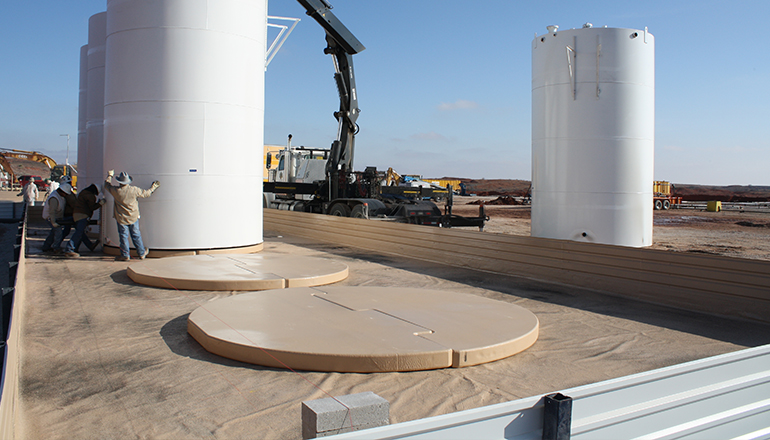
“We worked with the OCA technical team to develop a site-specific containment protocol,” said Hartley. “The key was deploying standardized polyurea-coated foam berms at every wellhead, fracking fluid transfer point, and production equipment cluster. We went from ad hoc containment to a systematic approach.”

The company deployed 127 foam berm units across their operational footprint, utilizing a tiered system: 12’x16′ standard berms for individual wellhead protection, 24’x32′ berms for multi-unit equipment pads, and custom 40’x60′ configurations for tank battery areas.

Results

Over 36 months of deployment:

  • Reportable spill incidents dropped from 11/year to less than 1/year
  • EPA fine exposure eliminated (zero reportable releases in 2025)
  • Soil remediation costs reduced by $280,000 annually
  • Insurance premium reduction of 22% on environmental liability coverage
  • Passed all state and federal SPCC inspections with zero deficiencies

Lessons Learned

Hartley emphasizes that the containment system alone wasn’t the complete solution. “The OCA training program was equally important. We had all 215 employees complete the SPCC awareness training, and we added containment integrity checks to our daily safety routines. The equipment is only as good as the people using it.”

Cascade Energy Services received the OCA Environmental Excellence Award in 2025 for their outstanding commitment to spill prevention.

Cold Weather Containment: Tips for Winter Operations in Northern Climates

As winter settles across the northern United States and Canada, oil containment operators face unique challenges that require specific preparation and equipment considerations. This article provides practical guidance for maintaining effective containment in cold weather conditions.

The Cold Weather Challenge

Cold weather affects containment systems in several ways that can compromise their effectiveness. Understanding these mechanisms is essential for maintaining compliance through winter months.

Material Brittleness

Many containment liner materials become brittle at low temperatures. Standard PVC liners can crack when flexed below 10°F, creating leakage pathways that may not be visible without careful inspection. Foam berm walls can lose their self-sealing properties if the foam becomes too rigid.

Ice Formation

Water accumulation in containment berms freezes and expands, potentially displacing liner materials or cracking containment walls. A berm full of ice provides little or no oil containment capacity, and the expansion forces can permanently deform containment walls.

Spill Response Complications

Cold temperatures dramatically increase crude oil and refined product viscosity, slowing the spread rate but also making cleanup significantly more difficult. Absorbent products perform poorly with highly viscous, cold oil.

Equipment Selection for Cold Climates

Liner Materials

Specify polyurea coatings formulated for cold temperature performance. Quality polyurea remains flexible to -60°F and maintains its elongation and tear resistance. Avoid PVC for any application where temperatures below 10°F are expected.

Foam Core Materials

Closed-cell polyisocyanurate foam maintains its structural properties to -100°F. Specify this foam formulation for all cold-climate containment applications. Standard expanded polystyrene (EPS) foam is not recommended for cold-climate applications.

Winter Maintenance Procedures

Implement the following winter maintenance procedures for all containment systems:

  1. Conduct daily visual inspections during periods of rapid temperature change
  2. Remove accumulated snow and ice from containment berms promptly
  3. Inspect liner seams and foam wall junctions after each freeze-thaw cycle
  4. Drain containment areas after precipitation events to prevent ice accumulation
  5. Test containment integrity with a water fill test after periods of extreme cold

Transformer Oil Containment: Requirements for Utility and Renewable Energy Operators

Electric utility operators and renewable energy facility managers are increasingly subject to secondary containment requirements for transformer oil. This article covers the regulatory framework, technical requirements, and practical solutions for transformer oil containment.

Regulatory Framework

Transformer oil containment falls under multiple overlapping regulatory frameworks. Utility-scale transformers typically contain PCB-free mineral oil, sometimes up to 50,000+ gallons for large power transformers. Key regulations include:

  • EPA 40 CFR Part 112 (SPCC Rule): Applies to facilities with total oil storage capacity exceeding 1,320 gallons that could discharge to navigable waters
  • EPA 40 CFR Part 761 (PCB Regulations): Applies if transformer oil contains PCBs at or above 50 ppm
  • NERC Standards: Reliability standards that indirectly address transformer protection including spill prevention
  • State Environmental Regulations: Many states have additional requirements more stringent than federal minimums

Containment System Requirements

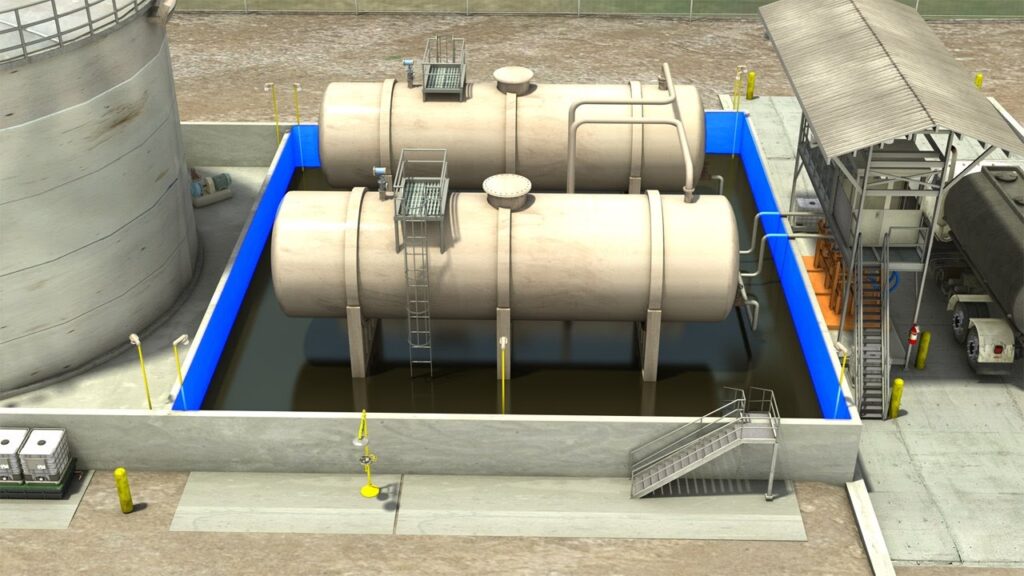
Secondary containment for transformers must hold at least 110% of the largest single container volume. For a 5,000-gallon transformer, this means your containment system must hold at least 5,500 gallons. Options include:

Permanent Concrete Containment Pads

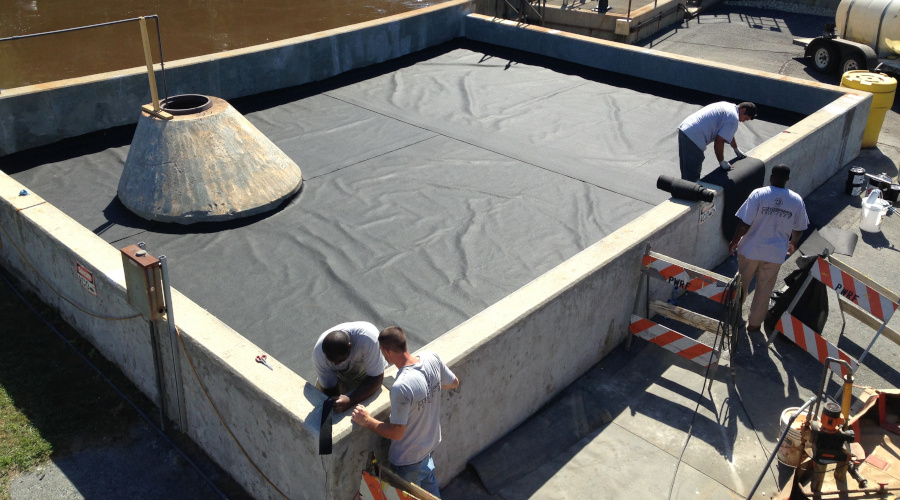
Traditional approach for permanent installations. Reinforced concrete with impermeable coating, designed to hold 110%+ of largest transformer capacity. Sloped toward a collection sump. Cost: $15,000-$80,000 depending on size and site conditions.

Foam Berm Systems

Increasingly popular for substations, wind farm transformer pads, and solar inverter stations where permanent construction is impractical or prohibited. Polyurea-coated foam berms can be configured in custom shapes to fit pad geometries. Key advantages: no excavation required, deployed in hours, fully removable if site is decommissioned.

Modular Steel Containment Systems

Bolted steel panels with liner provide intermediate durability between temporary and permanent systems. Good choice for temporary substations and construction staging.

Renewable Energy Applications

The rapid growth of utility-scale solar and wind installations has created significant demand for flexible transformer containment solutions. A single 100 MW solar farm may have 30-50 pad-mount transformers, each requiring secondary containment. Foam berm systems with custom liner geometries are increasingly the preferred solution due to ease of installation during construction and lower cost versus poured concrete.

Loading...

Get Free Expert Tips

Subscribe for oil containment best practices, regulatory updates & product news.

No spam. Unsubscribe anytime.