
As winter settles across the northern United States and Canada, oil containment operators face unique challenges that require specific preparation and equipment considerations. This article provides practical guidance for maintaining effective containment in cold weather conditions.
The Cold Weather Challenge#
Cold weather affects containment systems in several ways that can compromise their effectiveness. Understanding these mechanisms is essential for maintaining compliance through winter months.
Material Brittleness#
Many containment liner materials become brittle at low temperatures. Standard PVC liners can crack when flexed below 10°F, creating leakage pathways that may not be visible without careful inspection. Foam berm walls can lose their self-sealing properties if the foam becomes too rigid.
Ice Formation#
Water accumulation in containment berms freezes and expands, potentially displacing liner materials or cracking containment walls. A berm full of ice provides little or no oil containment capacity, and the expansion forces can permanently deform containment walls.
Spill Response Complications#
Cold temperatures dramatically increase crude oil and refined product viscosity, slowing the spread rate but also making cleanup significantly more difficult. Absorbent products perform poorly with highly viscous, cold oil.
Equipment Selection for Cold Climates#
Liner Materials#
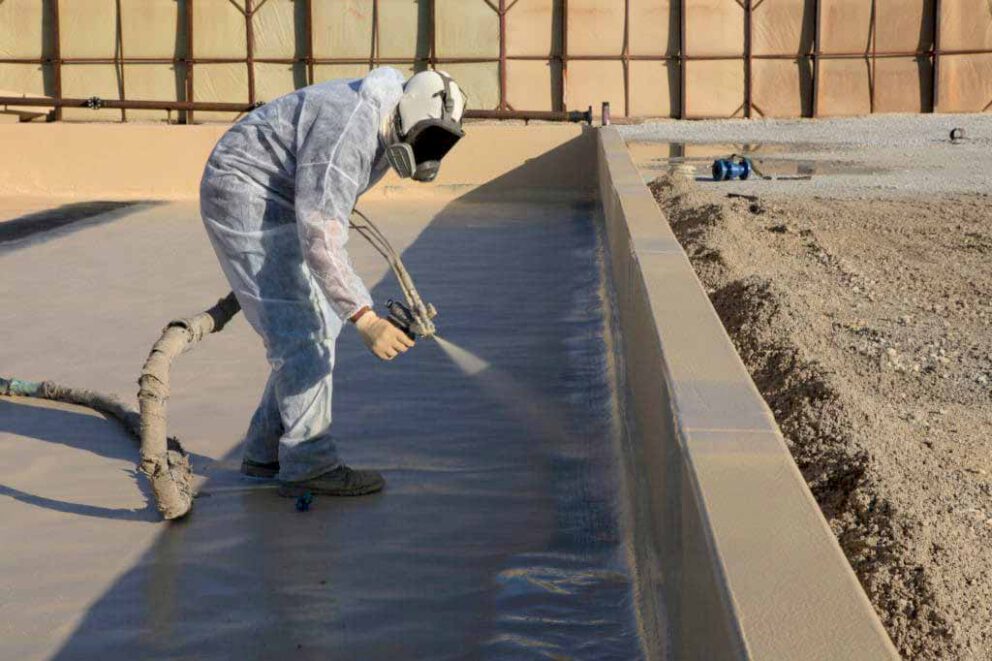
Specify polyurea coatings formulated for cold temperature performance. Quality polyurea remains flexible to -60°F and maintains its elongation and tear resistance. Avoid PVC for any application where temperatures below 10°F are expected.
Foam Core Materials#
Closed-cell polyisocyanurate foam maintains its structural properties to -100°F. Specify this foam formulation for all cold-climate containment applications. Standard expanded polystyrene (EPS) foam is not recommended for cold-climate applications.
Winter Maintenance Procedures#
Implement the following winter maintenance procedures for all containment systems:
- Conduct daily visual inspections during periods of rapid temperature change
- Remove accumulated snow and ice from containment berms promptly
- Inspect liner seams and foam wall junctions after each freeze-thaw cycle
- Drain containment areas after precipitation events to prevent ice accumulation
- Test containment integrity with a water fill test after periods of extreme cold