
Choosing the right liner material for your secondary containment system is a critical decision that affects long-term performance, regulatory compliance, and total cost of ownership. This article provides a technical comparison of the two most widely used containment liner materials: polyurea coatings and PVC liners.
Material Properties Overview#
Polyurea#
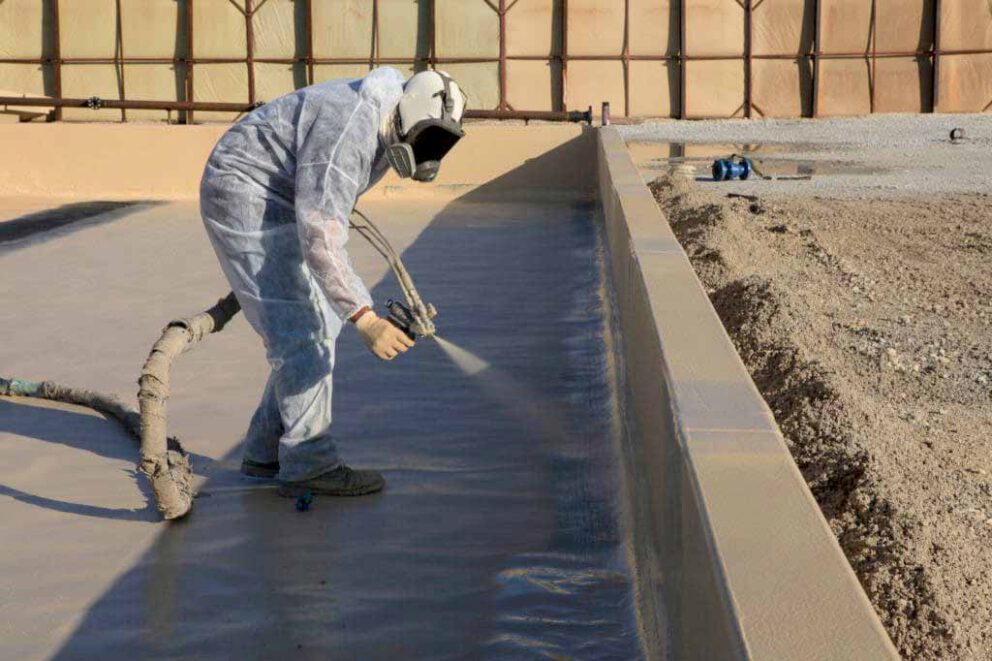
Polyurea is a type of elastomer formed by the reaction of an isocyanate component and a resin blend component through step-growth polymerization. For containment applications, spray-applied polyurea coatings are applied directly to foam or substrate surfaces, creating a seamless, monolithic membrane.
Key properties:
- Shore A hardness: 85-95 (tunable)
- Tensile strength: 2,000-4,500 psi
- Elongation at break: 300-600%
- Temperature range: -60°F to 350°F
- Chemical resistance: Excellent to petroleum hydrocarbons, moderate to strong acids
- UV resistance: Good to excellent (with UV stabilizers)
PVC (Polyvinyl Chloride)#
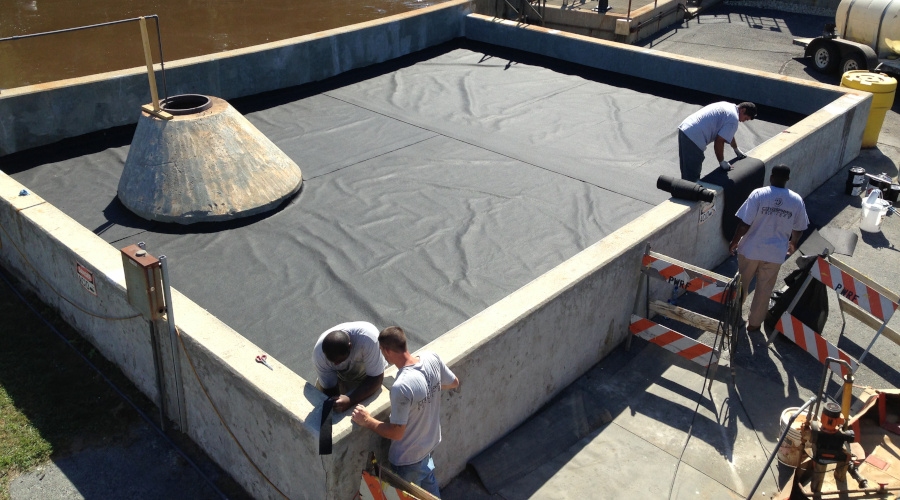
PVC liners for containment applications are typically reinforced fabric panels welded together at seams. They are available in thicknesses from 20 mil to 80 mil for containment applications.
Key properties:
- Tensile strength: 200-400 lb/in (depending on thickness)
- Temperature range: -10°F to 150°F (unreinforced)
- Chemical resistance: Good to petroleum hydrocarbons, poor to aromatic solvents
- UV resistance: Moderate (degrades significantly over 3-5 years without UV stabilizers)
Performance Comparison#
Seam Integrity#
Polyurea wins decisively. Spray-applied polyurea creates a seamless coating with no joints or seams. PVC liners require heat-welded seams at every panel junction, which are the primary failure points. In our field studies, over 80% of PVC liner failures occurred at seams.
Puncture Resistance#
Polyurea is significantly more puncture-resistant. Standard containment polyurea resists puncture from typical job site debris (rocks, equipment feet) that routinely penetrate 40-mil PVC. For vehicle drive-over applications (foam berms), polyurea is the only viable choice.
Temperature Performance#
Polyurea significantly outperforms PVC in both extreme cold and heat. PVC becomes brittle below 10°F and can crack under flex loading. Polyurea remains flexible at temperatures as low as -60°F, making it the only appropriate choice for Arctic and sub-Arctic applications.
Cost Comparison#
PVC has lower upfront material costs ($0.40-$1.20/sq ft for 40-mil PVC vs. $3-8/sq ft for applied polyurea). However, when total lifecycle costs are considered over a 10-year period, polyurea typically proves more economical due to lower maintenance, repair, and replacement costs.
OCA Recommendation#
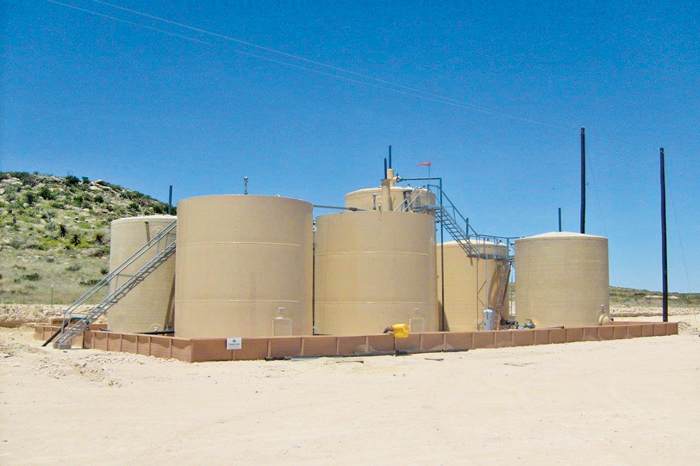
For portable foam berm containment systems, drive-through containment areas, and cold-weather applications, OCA recommends polyurea-coated systems. For large-area liner applications with controlled environments and lower mechanical stress, properly installed PVC can be a cost-effective solution when budget constraints preclude polyurea.